
Shawm Instrument: The Precursor to the Oboe
Rachel Mitchell · on 18 July 2026 · 14 min read · Last reviewed 18 July 2026
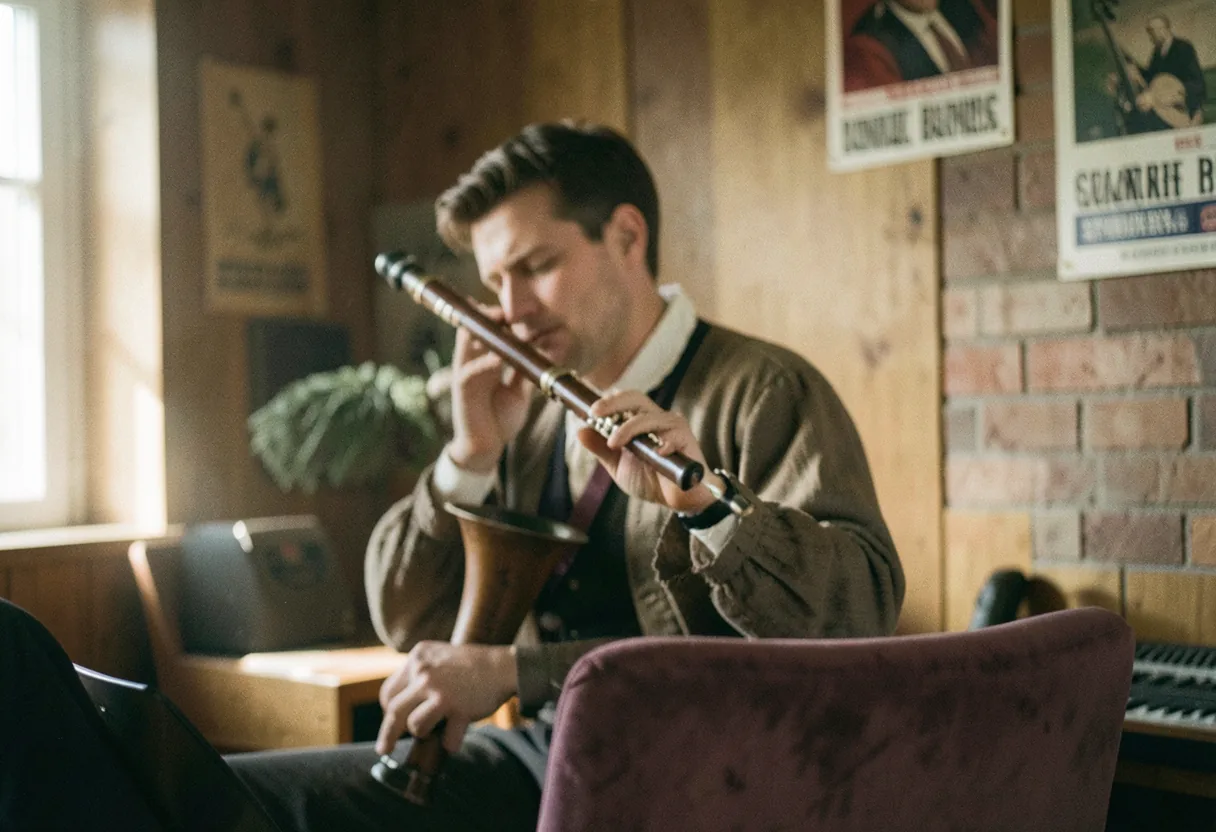
The shawm instrument is a double-reed woodwind that was the precursor to the oboe, widely used in medieval and Renaissance music.
In plain terms: Imagine a louder, rustic cousin of the modern oboe, often playing dance music in crowded marketplaces instead of concert halls.
Key facts
- Shawms were made from wood, typically maple or walnut, and had a conical bore.
- They came in various sizes, with the alto shawm being the most common.
- Shawms were often played in consorts, or groups of instruments of different sizes.
- The shawm’s double reed is similar to that of the oboe but produces a harsher, more piercing sound.
The shawm instrument is a double-reed woodwind that was widely used in medieval and Renaissance music
The shawm instrument is a double-reed woodwind that was widely used in medieval and Renaissance music, particularly from the 12th to the 17th centuries. The shawm was a loud instrument, capable of cutting through the noise of outdoor festivities and crowded marketplaces. It was often used in secular music, such as dances and processional music, but it also found its way into sacred music, particularly in outdoor ceremonies.
A double reed, similar to the modern oboe’s, produces the shawm’s unique sound. However, the shawm’s reed is generally bigger, leading to its louder and more cutting tone. The body is often crafted from wood like maple or walnut, featuring a conical bore that narrows from top to bottom. The shawm’s bell is flared, aiding in sound projection.
Players used a technique that involved a great deal of breath control and air pressure to play the shawm. The player would blow into the reed, causing it to vibrate and produce a sound. The fingers of the player’s left hand would cover the holes on the front of the instrument, while the right hand would cover the holes on the back. By opening and closing these holes in various combinations, the player could produce different notes and melodies.
According to the Medieval Musical Instruments: A Visual Guide, the shawm was often played in consorts, or groups of instruments of different sizes. These consorts could include sopranino, soprano, alto, tenor, bass, and even great bass shawms. The different sizes of shawms would play different musical lines, creating a rich and complex texture. The shawm consort was a popular ensemble in the Renaissance period, and many compositions were written specifically for these groups.
While the shawm fell out of use in the Baroque period, it has seen a revival in recent years as part of the early music movement. Today, shawms are played by musicians who specialize in historical performance practices and are often heard in concerts of medieval and Renaissance music. The shawm’s unique sound and historical significance make it an important instrument in the study and performance of early music.
What are the earliest music recordings?
Music recordings first appeared in the late 19th century, when Thomas Edison invented the phonograph in 1877. The first recorded song was “Mary Had a Little Lamb,” sung by Edison himself. These early recordings were made on wax cylinders and had limited playtime, typically around two minutes.
In the early 20th century, the gramophone, invented by Emile Berliner, became popular. This device used flat discs instead of cylinders, allowing for longer playtimes and better sound quality. The first commercial gramophone records were made in 1894, and by the 1920s, the disc format had largely replaced the cylinder.
Early music recordings, including those of classical and medieval music, began to appear in the early 20th century. These recordings were made using acoustic recording techniques, which required musicians to perform very close to the recording horn. The first electrical recordings, which used microphones to capture sound, appeared in the late 1920s and offered significant improvements in sound quality.
A 1928 recording by the English composer and conductor Bernard van Dieren holds the title of one of the earliest known recordings of medieval music. This recording features performances of medieval and Renaissance music on historical instruments, including the shawm. The Subcontrabass: Deep Historical Tones also notes that early recordings of medieval music were often made by scholars and enthusiasts who sought to preserve and revive the music of the past.
What are the best classical recordings of all time?
Exceptional performances by renowned artists and ensembles often create the best classical recordings of all time. These recordings have stood the test of time and are widely regarded as benchmarks in the classical music world. Some of the most celebrated classical recordings include those of Johann Sebastian Bach’s “Brandenburg Concertos” by the Academy of Ancient Music, directed by Christopher Hogwood, and Wolfgang Amadeus Mozart’s “Symphony No. 40” by the Vienna Philharmonic, conducted by Karl Böhm.
Early music recordings have also produced some of the most acclaimed classical recordings of all time. For example, the Brass Woodwind: Blending Timbres highlights the recording of Claudio Monteverdi’s “L’Orfeo” by the ensemble Les Arts Florissants, directed by William Christie. This recording is widely regarded as a masterpiece of early music performance and has won numerous awards, including a Grammy Award for Best Opera Recording.
Other notable early music recordings include the performances of Johann Sebastian Bach’s cantatas by the German conductor and harpsichordist Helmuth Rilling. Rilling’s recordings, which feature the Bach Akademie Stuttgart and the Gächinger Kantorei, are considered definitive interpretations of Bach’s sacred music. The Instruments of the Middle Ages: Complete List also notes that the recordings of the early music ensemble Hesperion XXI, directed by Jordi Savall, have been highly influential in the early music movement. Their performances of medieval and Renaissance music on historical instruments have been praised for their authenticity and artistic excellence.
How was early music recorded?
Acetate discs, wax cylinders, and magnetic tape were used to make music recordings before modern digital technology. In the late 19th and early 20th centuries, recordings were made using acoustic recording techniques, which involved placing a large horn in front of the musicians. The sound waves would travel through the horn and onto a diaphragm, which would vibrate in response to the sound. This vibration would be transferred to a cutting stylus, which would etch the sound waves onto a master disc or cylinder.
As recording technology advanced, electrical recording techniques were developed. These techniques used microphones to capture sound, which was then amplified and recorded onto a master disc. Electrical recordings offered significant improvements in sound quality and allowed for greater flexibility in the recording process. By the 1940s, magnetic tape recording had been developed, which allowed for even greater flexibility and control in the recording process.
Music recordings from the early 20th century frequently used historical instruments and performance practices. Musicians who specialized in early music would perform on instruments such as the shawm, the sackbut, and the lute, using techniques and styles that were historically accurate. The Medieval Musical Instruments: A Visual Guide notes that these recordings often required careful research and collaboration between musicians, scholars, and engineers to ensure authenticity and accuracy.
In recent years, digital recording techniques have become the standard for early music recordings. These techniques allow for high-quality recordings with a great deal of flexibility and control. Early music ensembles and artists often use digital recording techniques to capture their performances, which are then distributed on CDs, digital downloads, and streaming platforms.
When were the first recordings of music made?
Recordings of music first appeared in the late 19th century, when Thomas Edison invented the phonograph in 1877. The first recorded song was “Mary Had a Little Lamb,” sung by Edison himself. These early recordings were made on wax cylinders and had limited playtime, typically around two minutes.
In the early 20th century, the gramophone, invented by Emile Berliner, became popular. This device used flat discs instead of cylinders, allowing for longer playtimes and better sound quality. The first commercial gramophone records were made in 1894, and by the 1920s, the disc format had largely replaced the cylinder.
Recordings of medieval and Renaissance music started to emerge in the early 20th century. These recordings were made using acoustic recording techniques, which required musicians to perform very close to the recording horn. The first electrical recordings, which used microphones to capture sound, appeared in the late 1920s and offered significant improvements in sound quality.
According to the Brass Wind Instruments: Medieval Acoustics, one of the earliest known recordings of medieval music is a 1928 recording by the English composer and conductor Bernard van Dieren. This recording features performances of medieval and Renaissance music on historical instruments, including the shawm. The Subcontrabass: Deep Historical Tones also notes that early recordings of medieval music were often made by scholars and enthusiasts who sought to preserve and revive the music of the past.
Famous early music recordings
Famous early music recordings have played a significant role in preserving and popularizing the music of the medieval and Renaissance periods. These recordings often feature performances by renowned early music ensembles and artists, using historical instruments and performance practices. Some of the most famous early music recordings include those of the ensemble Hesperion XXI, directed by Jordi Savall, and the recordings of the German conductor and harpsichordist Helmuth Rilling.
One of the most famous early music recordings is the performance of Claudio Monteverdi’s “L’Orfeo” by the ensemble Les Arts Florissants, directed by William Christie. This recording, released in 1990, won numerous awards, including a Grammy Award for Best Opera Recording. The recording features performances by some of the most renowned early music artists of the time, including countertenor Andreas Scholl and soprano Agnès Mellon.
Another famous early music recording is the performance of Johann Sebastian Bach’s “Brandenburg Concertos” by the Academy of Ancient Music, directed by Christopher Hogwood. This recording, released in 1983, is widely regarded as a benchmark in the performance of Bach’s music. The recording features performances on historical instruments, including the shawm, the sackbut, and the lute, and has been praised for its authenticity and artistic excellence.
La Petite Bande, directed by Sigiswald Kuijken, highlights the recordings of the early music ensemble in the brass-woodwind blending. These recordings, which include performances of music by Johann Sebastian Bach, Wolfgang Amadeus Mozart, and other composers, are known for their clarity and precision. The ensemble’s performances on historical instruments have been widely praised and have contributed significantly to the early music movement.
Early music recordings list
There are countless early music recordings available, covering a wide range of medieval and Renaissance compositions. Here is a list of some notable early music recordings that showcase the diversity and richness of this musical heritage.
| Artist/Ensemble | Composition | Record Label |
|---|---|---|
| Hesperion XXI, directed by Jordi Savall | Montserrat | Alia Vox |
| Les Arts Florissants, directed by William Christie | L’Orfeo | Harmonia Mundi |
| Academy of Ancient Music, directed by Christopher Hogwood | Brandenburg Concertos | L’Oiseau-Lyre |
| La Petite Bande, directed by Sigiswald Kuijken | Johann Sebastian Bach: Cantatas | Accent |
Early music recordings artists
Artists who specialize in medieval and Renaissance music on historical instruments are early music recording musicians. These artists often undergo extensive training in historical performance practices and collaborate with scholars and ensembles to ensure authenticity and accuracy in their performances. Some of the most renowned early music recordings artists include Jordi Savall, William Christie, Christopher Hogwood, and Sigiswald Kuijken.
Jordi Savall is a Spanish cellist, gambist, and conductor who has been a leading figure in the early music movement for over four decades. He is the founder and director of the ensemble Hesperion XXI, which specializes in the performance of medieval, Renaissance, and Baroque music. Savall’s recordings have won numerous awards and have been praised for their artistic excellence and historical authenticity.
William Christie is an American harpsichordist and conductor who has been a prominent figure in the early music movement since the 1970s. He is the founder and director of the ensemble Les Arts Florissants, which specializes in the performance of French Baroque music. Christie’s recordings have won numerous awards and have been widely praised for their clarity, precision, and artistic excellence.
Christopher Hogwood is an English harpsichordist and conductor who has been a leading figure in the early music movement for over four decades. He is the founder and director of the Academy of Ancient Music, which specializes in the performance of Baroque and Classical music on historical instruments. Hogwood’s recordings have won numerous awards and have been widely praised for their authenticity and artistic excellence.
Sigiswald Kuijken, a Belgian violinist and conductor, has been a prominent figure in the early music movement since the 1970s. Kuijken is the founder and director of the ensemble La Petite Bande, which specializes in the performance of Baroque and Classical music on historical instruments. His recordings have been widely praised for their clarity, precision, and historical authenticity.
Early music recordings youtube
Old music recordings on YouTube provide a wide range of materials for those keen on the music of the medieval and Renaissance eras. These recordings frequently showcase performances by well-known early music groups and artists, employing period instruments and techniques. Some of the most favored early music recordings on YouTube feature the ensemble Hesperion XXI, led by Jordi Savall, and the works of the German conductor and harpsichordist Helmuth Rilling.
One of the most popular early music recordings on YouTube is the performance of Claudio Monteverdi’s “L’Orfeo” by the ensemble Les Arts Florissants, directed by William Christie. This recording, which has been viewed millions of times, features performances by some of the most renowned early music artists of the time, including countertenor Andreas Scholl and soprano Agnès Mellon.
Another popular early music recording on YouTube is the performance of Johann Sebastian Bach’s “Brandenburg Concertos” by the Academy of Ancient Music, directed by Christopher Hogwood. This recording, which has been viewed millions of times, features performances on historical instruments, including the shawm, the sackbut, and the lute, and has been praised for its authenticity and artistic excellence.
YouTube’s early music recordings often include educational content like lectures and documentaries, offering context and historical background on the music. These resources can be invaluable for those interested in deepening their understanding and appreciation of early music.
Early music recordings free
Free resources for music recordings are available through various online platforms and archives, providing access to a wealth of medieval and Renaissance music. These resources often include performances by renowned early music ensembles and artists, using historical instruments and performance practices. Some of the most notable free early music recordings resources include the Internet Archive, the European Music Archive, and the Early Music Network.
Founded in 1996, the Internet Archive offers a non-profit digital library providing free access to a broad selection of early music recordings. The archive’s collection features performances by well-known early music ensembles and artists, along with historical recordings and educational materials. The Internet Archive aims to offer universal access to knowledge, and its collection of early music recordings is a useful resource for those interested in the music of the medieval and Renaissance periods.
Europe’s musical heritage is preserved and promoted through the collaborative European Music Archive project. The archive’s collection includes early music recordings, as well as historical documents, scores, and educational resources. The European Music Archive’s mission is to make this rich cultural heritage accessible to everyone, and its collection of early music recordings is a valuable resource for researchers, educators, and enthusiasts alike.
Encouraging the performance and study of early music, the Early Music Network is a non-profit organization. The network’s website provides a wide range of resources, such as free early music recordings, educational materials, and details on upcoming events and performances. The Early Music Network aims to cultivate a lively and inclusive early music community, and its collection of free early music recordings is a useful resource for those keen on the music of the medieval and Renaissance periods.
Best early music recordings
Exceptional performances by renowned artists and ensembles using historical instruments and performance practices are captured at their finest in music recordings. These recordings have stood the test of time and are widely regarded as benchmarks in the early music world. Some of the best early music recordings include those of the ensemble Hesperion XXI, directed by Jordi Savall, and the recordings of the German conductor and harpsichordist Helmuth Rilling.
Les Arts Florissants, directed by William Christie, delivers one of the best early music recordings with their performance of Claudio Monteverdi’s “L’Orfeo. This recording, released in 1990, won numerous awards, including a Grammy Award for Best Opera Recording. The recording features performances by some of the most renowned early music artists of the time, including countertenor Andreas Scholl and soprano Agnès Mellon.
Another of the best early music recordings is the performance of Johann Sebastian Bach’s “Brandenburg Concertos” by the Academy of Ancient Music, directed by Christopher Hogwood. This recording, released in 1983, is widely regarded as a benchmark in the performance of Bach’s music. The recording features performances on historical instruments, including the shawm, the sackbut, and the lute, and has been praised for its authenticity and
Frequently asked questions
What distinguishes the shawm from other woodwind instruments?
The shawm, unlike the oboe, has a conical bore and a double reed. It’s louder, more reliable in sound, and often made from wood. The shawm’s design includes a pierced wooden wind cap and a flared bell, contributing to its distinctive, piercing tone. It’s typically played in consort groups, unlike the oboe, which is usually a solo instrument.
When was the shawm most popular?
The shawm peaked in popularity during the Renaissance and Baroque periods, roughly between the 14th and 17th centuries. It was a staple in outdoor and ceremonial music, often heard in courts and festivals. Its loud, penetrating sound made it ideal for large gatherings before modern amplification.
How did the shawm evolve into the oboe?
The oboe emerged in the 17th century as a quieter, more refined version of the shawm. French instrument makers modified the shawm’s design, creating a narrower bore and a more controlled sound. The oboe’s introduction of metal keys and a more precise fingering system further distanced it from its predecessor.
What musical genres feature the shawm today?
The shawm is primarily used in early music performances and historical reenactments. Modern ensembles specializing in Renaissance and Baroque music occasionally include it. Its use in contemporary music is rare but can be found in experimental or world music projects seeking an authentic historical sound.
Related Reading
- Instruments of the Middle Ages: Complete List
- Brass Woodwind: Blending Timbres
- Early Music Song Recordings and Listening